Short answer
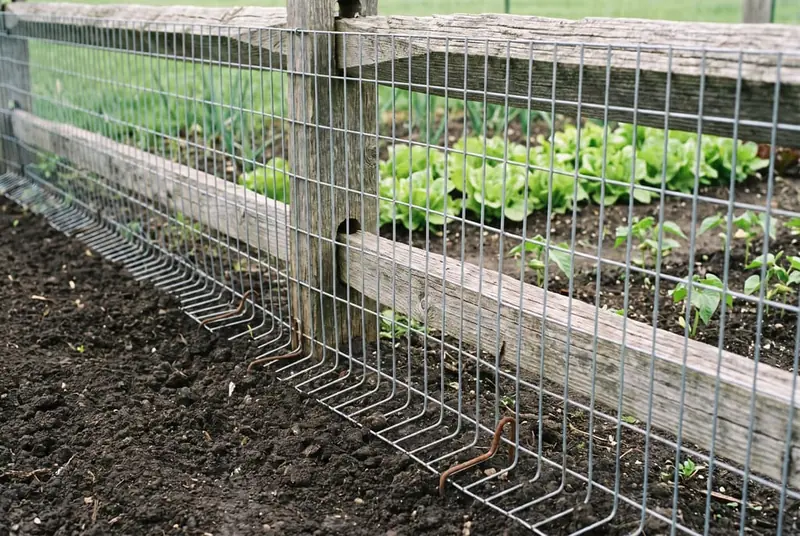
For rabbits, Penn State Extension's spec is a fence at least 24 in high with no opening bigger than 1 in, buried 2 to 3 in into the soil. Groundhogs dig and climb, so bury the mesh deeper or bend it outward along the ground, and leave the top loose. Around Lansdale, check the code first: the borough bans fences made only of wire, so mount the mesh on a wood or metal frame.
Penn State's rabbit-fence spec
| Item | Penn State Extension guidance |
|---|---|
| Height | At least 24 in |
| Openings | No hole larger than 1 in |
| Bottom | Buried 2 to 3 in into the soil |
From Penn State Extension horticulturist Jim Sellmer.
Rabbits don't jump high fences and don't dig deep, so the job is mostly about the openings and the bottom edge. Young rabbits squeeze through gaps you'd never expect, which is why the 1-in figure matters.
Groundhogs are a different problem
Groundhogs dig, and they climb. A rabbit fence that's only buried 2 to 3 in won't stop one that wants in. Two things help: bend the bottom of the mesh outward along the ground in an L so an animal digging at the fence hits wire, and leave the top of the mesh loose or angled out so it flops back when climbed. Electric strands are a common fix on farms, but Montgomery Township bans electric fences except for agriculture, and Horsham allows them only on agricultural lots over 10 acres.
Local rules for garden fences
| Municipality | What matters for a garden fence |
|---|---|
| Lansdale Borough | Fencing made entirely of wire is prohibited, and fences must be natural-looking materials. Mount mesh on a wood frame or a post-and-rail fence. |
| Upper Moreland (Willow Grove) | Wire fences are prohibited; chain link must be vinyl-coated. |
| Towamencin | Welded wire is allowed when it's set against a post-and-rail or split-rail fence. |
| Montgomery Township | Temporary roll-up woven wire, plastic or lath fences up to 6 ft for a period the Zoning Officer sets; chicken runs need a permit and a fence at least 4 ft high. |
| Lower Moreland (Huntingdon Valley) | Building-code permits are required only for fences over 3 ft, so a low garden fence may fall under that line. |
Checked October 2026 from the cited code. Codes change; we confirm with the zoning office before every install.
If deer are in the picture too
In Blue Bell, deer pressure is serious enough that Whitpain's Shade Tree Committee reported deer stalling forest regrowth near Center Square Park. A 24-in rabbit fence does nothing about deer; Penn State's whole-yard deer figure is at least 7 ft. Many gardens need both: a tight, buried lower mesh for rabbits and groundhogs and a taller structure above it where your township allows. See how tall a deer fence needs to be.
Garden fences we build
- Split rail with welded wire: a 3-rail wood fence at about $22–35 per foot installed, with wire mesh fastened inside and buried at the bottom. It satisfies Lansdale's no-all-wire rule and Towamencin's welded-wire allowance.
- Wood picket with mesh backing: a cottage look for a front or side garden where open fences are required.
- Small enclosed beds: a framed, gated enclosure around raised beds, easier to make critter-tight than a whole yard.
Show us the garden at the estimate, and tell us what's been eating it; the fix for rabbits isn't the fix for groundhogs.
Common questions
Does chicken wire work for rabbits?
Penn State's limit is no opening over 1 in. Chicken wire with 1-in openings meets that, but it's light and rusts; welded wire lasts longer.
Do I need a permit for a 2-ft garden fence?
It depends on the township. Lower Moreland only requires building-code permits over 3 ft; Lansdale lists fences generally as permit work. We check before we build.
Will a garden fence keep out deer too?
Not at rabbit height. Deer need a much taller fence, which runs into local height caps.