
Short answer
Possibly, which is why it's worth acting now. Pennsylvania's general adverse-possession period is 21 years, but 42 Pa.C.S. § 5527.1 shortens it to 10 years for occupied single-family lots of half an acre or less. It doesn't apply to land inside a planned community. Whether your neighbor actually has a claim depends on facts a court weighs. This isn't legal advice; talk to a Pennsylvania real-estate attorney before you move or remove the fence.
The two time periods in Pennsylvania law
| Rule | Period | Where it applies |
|---|---|---|
| General adverse possession (42 Pa.C.S. § 5530) | 21 years | Land generally |
| Residential lots (42 Pa.C.S. § 5527.1) | 10 years | Occupied single-family lots of half an acre or less |
| Planned communities (§ 5527.1(f)) | The 10-year rule doesn't apply | Land within a planned community, such as many HOA developments |
Summaries from Nolo and Timoney Knox; not legal advice.
The 10-year rule matters around here. About a quarter of Montgomery County's homes were built in the 1960s and 1970s, and most twins and many post-war lots, in towns like Lansdale, Glenside and Abington, fall under the half-acre line. On those lots an old fence a couple of feet off the line has a shorter clock than people expect.
What a claim usually has to show
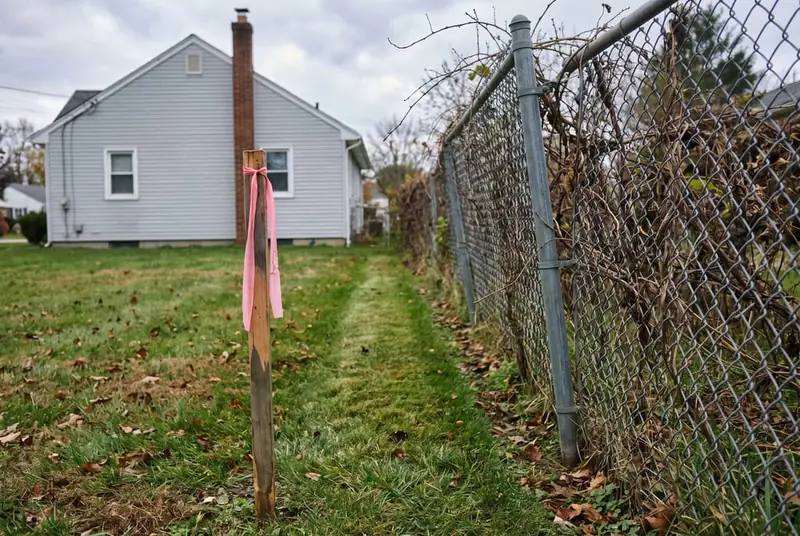
Adverse possession isn't just time. Pennsylvania courts look at whether the use was actual, continuous, exclusive, open and hostile, meaning without the owner's permission, for the whole period. One Pennsylvania case shows how ordinary the facts can be: in Burns v. Mitchell (Pa. Super. 1977), keeping a lawn mowed up to a fence counted as actual possession.
Permission is often the key fact. A fence that was put up by agreement, or that you allowed to stay, may be treated differently from one built without asking. That is exactly the kind of question an attorney needs to hear about.
When the 10-year rule doesn't apply
- Planned communities. Land within a planned community is excluded. That covers many HOA subdivisions; Montgomery Township, for one, grew from about 3,900 people in 1970 to nearly 26,000 in 2020, mostly in planned developments. The general 21-year rule is a separate question.
- Larger lots. Over half an acre, the 10-year rule doesn't fit, and the 21-year period is the starting point.
- Not a single-family home. The 10-year rule is written for occupied single-family lots.
Practical steps before anything changes
- Find out where the line really is. A licensed surveyor can stake it. A fence is not a survey.
- Write down the history. When the fence went up, who built it, who has mowed the strip, and any conversations about it.
- Talk to a real-estate attorney before you send a letter, tear out the fence or build a new one on the true line.
- Don't let the next fence repeat the problem. When the old fence is replaced, set the new one where the survey says, inside your line.
If you're the one replacing an old fence
Replacement is where most of these questions surface. When we set a new fence, we build on the line you give us from your survey or plot plan, not on the old post holes. Several townships push the same way: Montgomery Township wants boundary fences at least 2 in inside the owner's line, and Abington wants evidence of a boundary survey for fences within 5 ft of a line. If the old fence and the survey disagree, we'll stop and let you sort it out with your neighbor and your attorney before we dig.
A related idea, the consentable line, can make an old fence the legal boundary when both owners treated it that way for 21 years. See our page on consentable lines.
Common questions
Does paying property tax on the strip protect me?
Ask your attorney how your tax records fit in. Paying the tax isn't one of the elements listed above.
Can I just move the fence back to the line?
Not before you get legal advice. Removing a neighbor's fence can create a new dispute even if you're right about the line.
Does this apply to a hedge or a shed too?
The same principles can apply to any long-standing use of land. An attorney can tell you how they fit your facts.