Short answer
Upper Dublin Township's zoning code (§ 255-24) says any fence in the required front-yard setback must have an operable gate at least 36 in wide giving access to the strip between the fence and the street. You need at least one per street frontage and one for every 500 ft of fence along a street. The homeowner is responsible for maintaining that strip, and the gate is how you reach it.
What § 255-24 requires
| Requirement | Upper Dublin rule |
|---|---|
| Front-setback fence height | Up to 4 ft, measured from sidewalk grade |
| Gate | Operable, at least 36 in wide, opening to the strip between fence and street |
| How many gates | At least one per street frontage, plus one for every 500 ft of fencing along a street |
| The strip outside the fence | The property owner maintains it |
| Side and rear setbacks | Up to 6 ft |
| Finished side | Faces adjacent properties (the side without the structural supports) |
Upper Dublin Zoning § 255-24.
So why the gate?
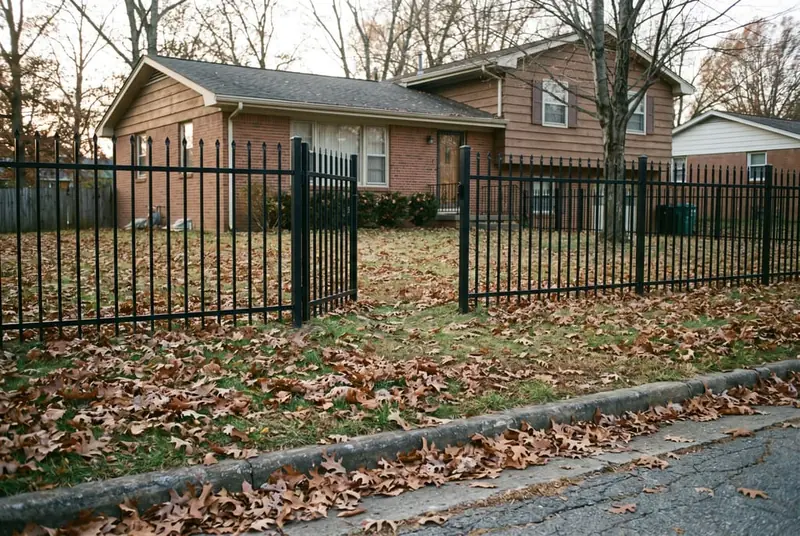
The code ties the gate to the strip. Once a fence goes up a few feet inside the front line, there is a band of your lawn on the street side of it. The township makes you responsible for keeping that band up, and the 36-in gate is the required way in. Without one, the only way to mow that grass or clear that sidewalk would be to walk around the end of the fence, which may be a long way on a wide lot.
Neighboring Worcester Township has the same idea in its code: a 36-in gate or opening on each street frontage, and per 500 ft of street fencing, so the strip between fence and road can be maintained. Lansdale Borough handles the same problem differently, by keeping fences 10 ft from the curb and behind the front wall of the house.
Corner lots in Dresher, Maple Glen and Fort Washington
Upper Dublin measures the front setback from every street frontage, so a corner lot has two front yards. If your fence enters the setback on both streets, plan on at least two gates, one facing each street. A long frontage on a road like Limekiln Pike or Welsh Road may need another one per 500 ft.
The code also has a narrow exception for corner lots on an arterial or primary street: a solid fence up to 6 ft in the front setback, if that area really works as the home's back yard, looks like wood, brick or stone, sits at least 1 ft back from the right-of-way, has landscaping in front of it, and the road isn't a designated scenic corridor. The gate rule still applies to fences in the front setback.
Planning a gate that you'll actually use
- Put it where you would step out with a mower or a snow shovel, often near the driveway or the front walk.
- 36 in is the minimum. A 4-ft walk gate gives a push mower more room.
- On a 4-ft aluminum or picket front fence, a matching gate disappears into the design.
- Set the gate where the lawn is flattest so it swings freely. On a sloped front yard, an aluminum gate can be hung to clear the rise.
- Self-closing hinges keep a dog from slipping out through the gate you added for the mower.
Filing the permit
Upper Dublin takes fence permits online only through its OpenGov portal, with a plot plan showing where the fence goes. The township's 2021 price list shows $50 for a new or replacement fence; check the current fee. A contractor has to finish the township's contractor registration before it can submit a permit. Draw the gates on the plot plan so the reviewer can see the § 255-24 requirement is met.
We draw the gates into every Upper Dublin front-yard layout, so the plot plan is right the first time. Ask us to sketch yours at the estimate.
Common questions
Does the gate rule apply to a rear-yard fence?
No. It is written for fences or walls in the required front-yard setback.
Can the gate be a removable panel instead?
The code says operable gate. A panel you unscrew is unlikely to count; ask the zoning office if you have something unusual in mind.
Does a pool fence in the front yard need the gate too?
Pools usually go in the rear. If any fence or wall is in the front setback, assume the gate rule applies and confirm with the township.