Short answer
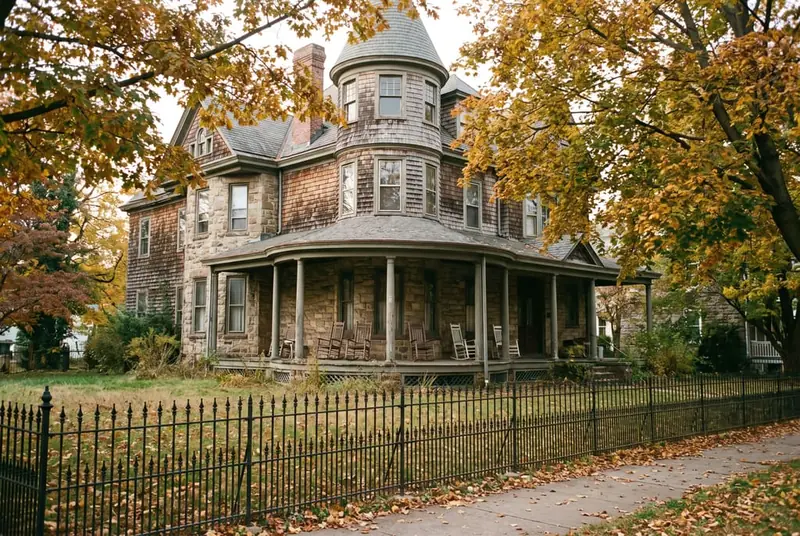
In Cheltenham Township’s La Mott and Wyncote historical districts, changing or adding a fence counts as an alteration, so it goes to the Board of Historical Architectural Review for a certificate of appropriateness before the permit. Everywhere in Cheltenham, required front yards allow only open fences up to 4 ft. Bryn Athyn’s rules near its National Historic Landmark district are unverified, so ask the borough. For style, open metal or painted picket in front, matched to the house’s era, fits most of these streets.
Which historic districts actually affect a fence?
It’s worth separating two kinds of "historic". A National Register listing recognizes a place’s significance. A local historical district is adopted by the township in its own ordinance. In our area, the local districts are the ones that put a review step into a fence project.
Wyncote and La Mott (Cheltenham Township)
Cheltenham has more National Register listings than any other municipality in Montgomery County: 13. The Wyncote Historic District was listed in 1986 and covers more than 100 acres with 178 contributing buildings, many of them Queen Anne and stone Colonial Revival houses. Cheltenham also treats La Mott and Wyncote as certified historical districts under its zoning code. There, "any change in man-made landscape structures (such as a wall, fence, trellis, or similar)" is an alteration (§ 295-1801A). That means review by the Board of Historical Architectural Review (BHAR) and a certificate of appropriateness before the township issues a permit.
Bryn Athyn
The Bryn Athyn Historic District became a National Historic Landmark in 2008. Its 37.7 acres along Huntingdon Pike (PA 232) include Bryn Athyn Cathedral, Cairnwood, Glencairn and Cairncrest, with grounds planned by landscape architect Charles Eliot. We haven’t been able to verify Bryn Athyn Borough’s fence code, or whether the borough reviews fences near the district, so we confirm with the borough before quoting there.
North Wales
North Wales created its Historic Preservation District in 2000, the first in the North Penn boroughs. The borough code directs its Historical Architectural Review Board to consider fences, gates and railings, even for work that doesn’t need a building permit. The borough’s design guidelines name wrought iron fences among the street’s character-defining features. The code isn’t explicit about whether every fence needs a certificate, so ask the borough first.
Elkins Park and Glenside outside the districts
Most of Elkins Park and Glenside is not in a local historical district, but the housing is just as old. Elkins Park, split between Cheltenham and Abington, is known for close-set Tudor, Queen Anne, Dutch Colonial and English Cottage homes, plus Gilded Age estates such as Lynnewood Hall and the Elkins Estate. Here the ordinary township fence code is what governs, and that code still does a lot to shape the street.
The front-yard rule that shapes these streets
Cheltenham’s fence section (§ 295-405A(6)) is short and strict about the front of the house:
- Up to 4 ft in the yard between the street and the house.
- No solid fences in the required front yard. An open fence is one that cuts through-visibility by no more than 50%.
- Corner lots have two front yards, and the 4 ft open-fence rule applies to both.
- No fences in the street right-of-way, which usually includes the curb and sidewalk.
- The finished side, without exposed structural members, faces neighbors and the street.
- A fence may sit up to 5 ft inside the property line if the line is clearly established and the owner keeps the strip outside the fence accessible and maintained.
On the Abington side of Elkins Park and Glenside, side and rear fences are limited to 6 ft without a Zoning Hearing Board special exception, and any fence on or within 5 ft of a property line needs a building permit backed by evidence of a boundary survey. We couldn’t read Abington’s zoning section on front-yard fences, so we confirm front-yard plans with the township.
Matching the fence to the house
These are the pairings we’d suggest. They’re judgment calls, not rules, and a historical review board may see it differently.
| House style | Fences that tend to fit | What to avoid |
|---|---|---|
| Queen Anne and Victorian | Black ornamental aluminum or steel styled like wrought iron; painted wood picket with shaped tops | Plain vinyl privacy panels facing the street |
| Stone Colonial Revival | Simple black metal picket at 3 to 4 ft; square-post painted picket | Busy lattice or scalloped vinyl |
| Tudor and English Cottage | Stained board or picket in natural wood tones; iron-look metal with simple finials | Bright white vinyl |
| Dutch Colonial | Painted picket, often white or the trim color | Chain link in the front yard |
| Mid-century and modern infill | Horizontal board or slim aluminum in back; low open metal in front | Ornate Victorian detailing |
In Cheltenham, anything in the required front yard must be open and no taller than 4 ft regardless of style.
Ornamental aluminum has become the practical stand-in for wrought iron: it reads the same from the sidewalk, meets the open-fence rules, and doesn’t rust. In back, where privacy matters and the fence isn’t seen from the street, a 6 ft cedar or board-on-board fence usually sits well behind an older house.
Old trees, old walls and old property lines
Wyncote and Glenside have some of the oldest street trees in our area, and that affects the fence line. You can trim a neighbor’s limbs that hang over the line, back to the line, and trees on the boundary are generally treated as jointly owned. When a post location lands in a big root, we move the post rather than cut the root.
Old fences and stone walls are common here, and they aren’t always on the deed line. Pennsylvania law can treat a line both neighbors accepted for 21 years as binding (a "consentable line"). Before removing an old fence or wall, find out where the true line is. Abington already requires boundary-survey evidence for fences near a line, and a Cheltenham inspector may require a field survey if the line is disputed. This isn’t legal advice; for a boundary question, talk to a Pennsylvania real-estate attorney.
Along Tookany Creek, Cheltenham bars fences in floodplains, swales and watercourses, and some Elkins Park owners have built stone walls after repeated flooding. Our creek and floodplain guide covers those lots.
Planning a fence in a review district
- Confirm whether your lot is inside the La Mott or Wyncote district (or North Wales’s district, or near Bryn Athyn’s).
- Photograph the house, the street view and any existing fence or wall.
- Pick a style, height and color, and get a drawing with dimensions and a product photo or sample.
- Ask the township what the review board needs and when it meets, and allow time for that before the permit.
- After approval, file the fence permit and the PA One Call request, then build.
If you’re in one of these neighborhoods, we’re glad to bring samples and photos to the free estimate so you can see a style against your house before anything goes to the township.
Common questions
Does National Register listing stop me from changing my fence?
In our area, fence review comes from the local ordinance, not from the listing itself. In Cheltenham’s La Mott and Wyncote districts, a fence change needs review before a permit. If you’re not sure whether your lot is in a local district, ask the township.
Can I put a 6 ft privacy fence in front of my Wyncote home?
No. Cheltenham allows only open fences, up to 4 ft, in the required front yard, inside or outside the historical districts. Six feet is the limit in side and rear yards.
What fence suits the Spanish-style houses in Abington’s Hollywood section?
That neighborhood has its own character: 1928 Mission and Art Deco homes. See our answer on Hollywood homes.